
There is a fine line between vulnerability and performance. As an artist and a performer, I am constantly reminded that we have to be incredibly careful not to exploit our personal lives for an audience. I think about the “kidfluencer” phenomenon—families who built empires on a camera lens. What starts as ingenious often ends in exploitation.
The MetaCocoMom brand was once very focused on the “JSquad,” but as my kids grew older, I felt that “ick.” I realized that we as women will be women until we die. We need to remember how to exist and care for ourselves after our children leave, because the ultimate goal is for them to eventually leave.
It is tempting to chase the algorithm—my engagement spikes whenever I share my personal struggles with discipline or grief. But being strategic offers a far better long game. To make a meaningful impact, we have to be intentional about what we share, why we share it, and how we offer it up to the world.
The River and the Undercurrent
Today, I am sharing from the heart of a heavy reality: my family is grieving. We lost our matriarch, my grandmother, earlier this month. As we navigate this loss through the lens of our Jamaican and American cultures, I am leaning into the “undercurrents” of our lives.
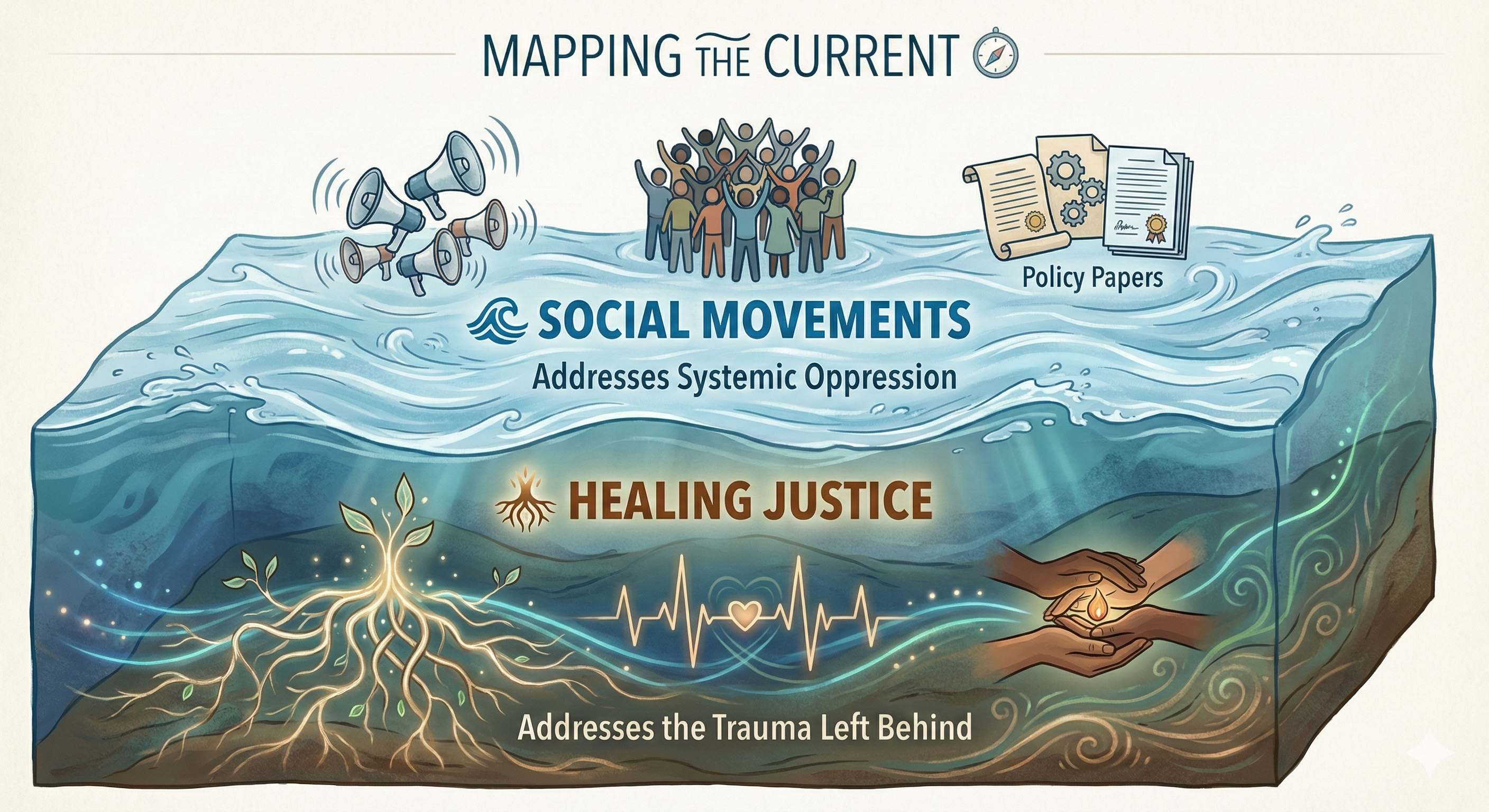
In Healing Justice Lineages, Eesha Pandit describes social movements like rivers—natural and powerful. But the most striking metaphor is that healing justice is the undercurrent. While the surface of the river addresses systemic oppression, the undercurrent handles the trauma left in the wake. We cannot move forward if we don’t address the pain of the past.
Healing as Resistance
This trauma isn’t a monolith. My wife and I often discuss this through the lens of Black Lesbianism. We were never conditioned to be in a relationship with other women; we were taught to manipulate and satiate men to get what we needed. Moving into intimate relationships with women levels the playing field of emotional intelligence, but it also reveals the decades of sexual trauma many of us carry without the tools to navigate.
As Cheryl Clarke wrote in Lesbianism: An Act of Resistance, for a Black woman to be a lesbian in a capitalist, misogynist culture is a literal act of resistance. Yet, that resistance comes with a price—hostility, the threat of physical or psychological dominance, and the pressure of isolation. We are retraumatized every time we turn on a television set that filters our lives through a heterosexual lens.
Liberating My Life: The Collective Path
Pandit explains that the strategies designed to address this trauma are what we call healing justice. It is healing because it addresses institutional harm; it is justice because it centers the community rather than the hegemonic white male approach.
I want to liberate my life from all of it. But I know I can’t do it alone. We need to heal collectively because we have been hurt collectively. My work this year is dedicated to building the containers for that healing:
- Labor Pains: A project designed for Black women to express and preserve their stories of labor and life, ensuring the “undercurrents” of our work throughout American history are finally documented and honored.
- Myth & Marrow: An Afrofuturistic Ritual: A space for everyone to actively empower and uplift the labor of Black women. It is a way to turn the “undercurrent” into a tsunami of active support.
As I navigate grief, discipline, a new marriage, and even half-marathon training, I am looking to liberate my life. I am looking for the marrow—the core of what sustains us.
Are you ready to join me? I invite you to see how we can build this collective future together.
Leave a Reply